Introduction: The Age of Intelligent Machines
Artificial Intelligence (AI) is no longer a concept confined to science fiction, research laboratories, or elite technology firms. It has become a global influence transforming economies, industries, education systems, governance, and human lifestyles. From smartphones that recognize our faces to algorithms that predict diseases, recommend content, or automate business decisions, AI is deeply woven into modern life.
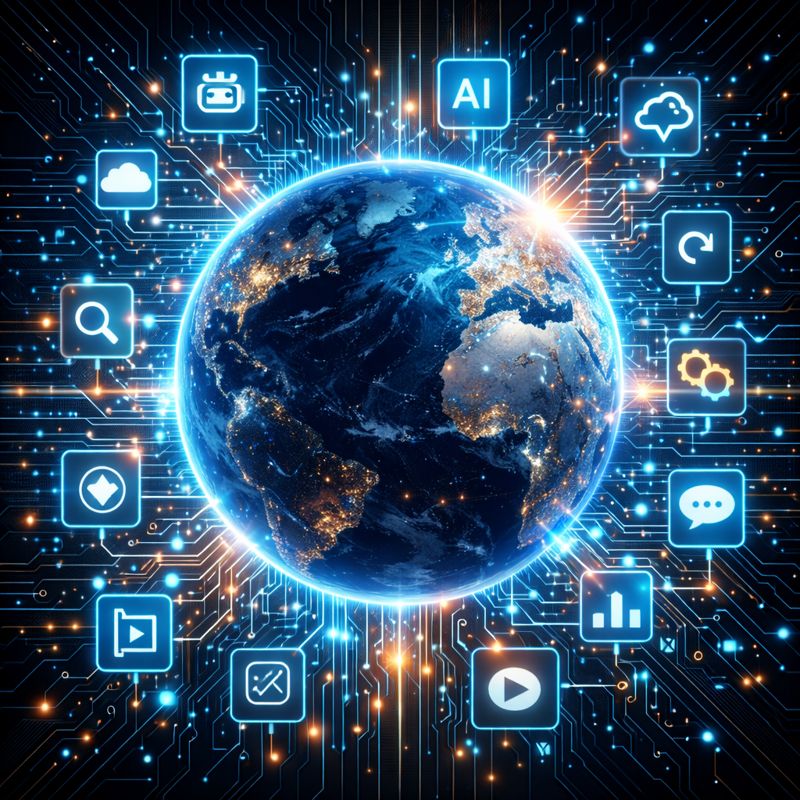
For students and professionals alike, understanding AI is no longer optional. It is a core literacy of the 21st century, comparable to reading, writing, or basic computing. This article explores AI’s global influence, its impact across sectors, ethical challenges, workforce transformation, and future possibilities, offering a comprehensive learning resource designed for both academic growth and career readiness.
Understanding Artificial Intelligence: A Foundational Overview
What Is Artificial Intelligence?
Artificial Intelligence refers to the ability of machines and software systems to simulate human intelligence, including learning, reasoning, problem-solving, perception, and decision-making. Unlike traditional software that follows fixed rules, AI systems can learn from data, improve with experience, and adapt to new situations.
AI broadly includes:
- Machine Learning (ML) – systems that learn patterns from data
- Deep Learning – neural networks inspired by the human brain
- Natural Language Processing (NLP) – understanding human language
- Computer Vision – interpreting images and videos
- Robotics – AI-driven physical machines
The Global Reach of AI: A Transformative Force
AI as a Driver of Economic Growth
AI has become a strategic economic asset for nations worldwide. Countries investing heavily in AI research, infrastructure, and talent are gaining competitive advantages in productivity, innovation, and global influence.
Key economic contributions of AI include:
- Automation of repetitive tasks
- Optimization of supply chains
- Enhanced financial forecasting
- Faster product development cycles
According to global studies, AI is expected to add trillions of dollars to the global economy over the coming decades, reshaping how wealth is created and distributed.
AI in Healthcare: Saving Lives Through Intelligence
Healthcare is one of the most impactful areas of AI adoption. AI-powered systems assist doctors by analyzing medical images, predicting disease progression, and personalizing treatment plans.
Notable applications include:
- Early detection of cancer through imaging analysis
- Predictive models for heart disease and diabetes
- AI-driven drug discovery reducing research time
- Virtual health assistants and remote patient monitoring
For students in medical, biotechnology, and data science fields, AI represents a new era of precision medicine driven by data and intelligence.
AI in Education: Redefining Learning for the Future
Personalized Learning and Intelligent Tutoring
AI is transforming education from a one-size-fits-all model to personalized, adaptive learning systems. Intelligent tutoring platforms analyze student performance and tailor content to individual learning styles and speeds.
Benefits include:
- Personalized study plans
- Real-time feedback
- Automated assessments
- Enhanced accessibility for learners with disabilities
For educators and students, AI enables lifelong learning and skill-based education aligned with industry needs.
AI as a Learning Companion for Students and Professionals
AI tools assist learners by:
- Explaining complex concepts
- Summarizing research papers
- Generating practice questions
- Providing coding assistance
Rather than replacing learning, AI acts as a learning accelerator, allowing individuals to focus on creativity, critical thinking, and problem-solving.
AI in Business and Industry: The Intelligent Enterprise
Automation and Decision Intelligence
Businesses worldwide are integrating AI into core operations to improve efficiency and competitiveness. AI systems analyze vast amounts of data to support strategic decisions.
Applications include:
- Customer behavior prediction
- Fraud detection in finance
- Demand forecasting
- Chatbots for customer service
Professionals who understand AI-driven decision-making gain a significant career advantage in management, analytics, and leadership roles.
How to Create a Personal Brand Using AI Tools | Cognitive Kraft
Best AI Writing Tools for Bloggers | Cognitive Kraft
AI and the Future of Work
One of the most debated topics is AI’s impact on employment. While AI will automate certain jobs, it will also create new roles requiring advanced skills.
Jobs likely to grow include:
- AI engineers and data scientists
- AI ethics specialists
- Automation managers
- Human-AI interaction designers
The future workforce will value adaptability, digital literacy, and interdisciplinary knowledge more than routine task execution.
AI in Governance and Public Policy
Smart Governance and Public Services
Governments are increasingly using AI to enhance public services, urban planning, and policy implementation.
Examples include:
- Traffic and transportation optimization
- Predictive crime analysis
- Automated tax and welfare systems
- Disaster prediction and response
When implemented responsibly, AI can make governance more efficient, transparent, and data-driven.
Risks of Surveillance and Power Concentration
However, AI also raises concerns about:
- Mass surveillance
- Data misuse
- Bias in automated decision-making
- Unequal access to AI benefits
These challenges highlight the need for strong regulations, ethical frameworks, and public awareness.
Ethical Dimensions of Artificial Intelligence
Bias, Fairness, and Transparency
AI systems learn from data, and biased data can lead to biased outcomes. This can affect hiring decisions, loan approvals, policing, and healthcare recommendations.
Ethical AI requires:
- Fair and representative datasets
- Explainable decision-making
- Accountability for AI outcomes
- Human oversight
For students and professionals, understanding AI ethics is essential to responsible innovation.
Human Values in an AI-Driven World
As AI systems become more autonomous, society must decide:
- What decisions should remain human?
- How much autonomy should machines have?
- How do we protect human dignity and creativity?
The future of AI is not just technical—it is deeply philosophical and human-centered.
AI and Creativity: Machines as Collaborators
AI in Art, Writing, and Innovation
AI is increasingly involved in creative fields such as:
- Music composition
- Graphic design
- Content writing
- Game development
Rather than replacing creativity, AI acts as a collaborative tool, expanding human imagination and productivity.
This shift encourages professionals to focus on conceptual thinking, originality, and storytelling, while AI handles repetitive execution.
The Future of Artificial Intelligence: What Lies Ahead?
Toward General and Responsible AI
The future of AI includes:
- More human-like reasoning systems
- Improved emotional and contextual understanding
- Safer and more transparent AI models
- Collaboration between humans and machines
AI will likely evolve into a co-intelligence, enhancing rather than replacing human capabilities.
Preparing for an AI-Driven Future
For students and professionals, preparation involves:
- Learning data and AI fundamentals
- Developing critical thinking and ethics awareness
- Embracing continuous learning
- Building interdisciplinary skills
The most successful individuals will be those who learn how to work with AI, not compete against it.
Conclusion: AI as a Mirror of Humanity’s Choices
Artificial Intelligence is not just a technological revolution—it is a reflection of human ambition, values, and responsibility. Its global influence will continue to grow, shaping economies, education, healthcare, governance, and culture.
The future of AI depends on how wisely we design, regulate, and use it. For learners and professionals, AI offers both opportunity and responsibility. By understanding its power, limitations, and ethical dimensions, we can ensure that AI serves humanity rather than controls it.
The question is no longer whether AI will shape the future—but how we choose to shape AI.
📚 Related Article
Social Media Automation Using AI
📚 FAQs
-
How is AI influencing the global economy?
AI is increasing productivity, automating processes, improving decision-making, and creating new industries, contributing trillions of dollars to the global economy.
-
Will artificial intelligence replace human jobs?
AI will replace some repetitive tasks but will also create new roles requiring creativity, critical thinking, and technical skills, leading to job transformation rather than elimination.
-
What are the ethical risks of artificial intelligence?
Major ethical risks include data privacy violations, algorithmic bias, lack of transparency, misuse of surveillance, and over-reliance on automated decisions.
-
How can students prepare for an AI-driven future?
Students should learn AI fundamentals, data literacy, and ethical awareness and continuously upgrade skills to work effectively alongside AI systems.