
Introduction
The rise of no-code AI tools has completely transformed how individuals and businesses build applications, automate workflows, and create powerful digital solutions—without writing a single line of code. Whether you are an entrepreneur, freelancer, small business owner, or creative maker, these platforms allow you to create apps, automate tasks, build chatbots, design analytics dashboards, and even launch AI-driven products directly from your browser. In today’s fast-growing digital world, knowing how to utilize no-code AI builders is becoming just as important as traditional programming. This article explores the best no-code AI tools, their features, workflows, templates, and real-world use cases. It also includes helpful external links and affiliate resources to help you kickstart your AI journey with accessible tools.
What Are No-Code AI Tools?
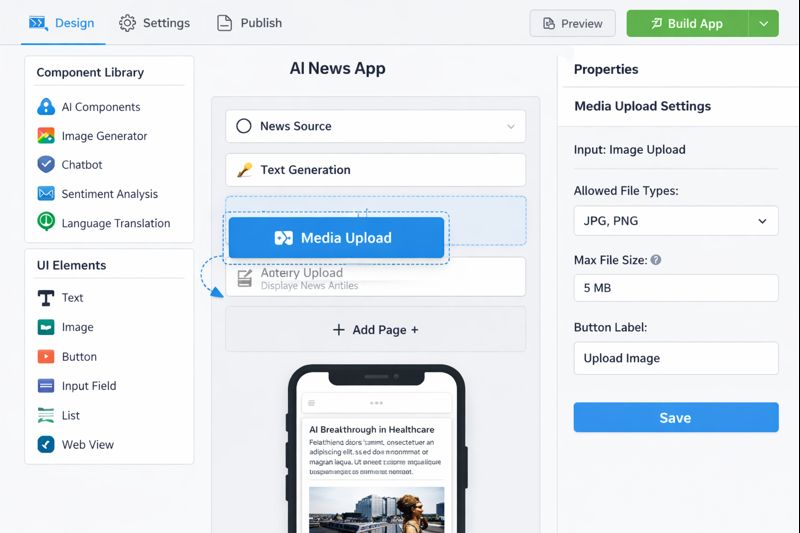
No-code AI tools are software platforms that allow users to build AI-powered applications without writing code. They simplify highly technical tasks like machine learning, automation, chatbot creation, and predictive analytics by using drag-and-drop interfaces, pre-made templates, and intuitive visual workflow builders. Instead of relying on programming languages like Python or JavaScript, you simply select functions, integrate APIs, upload data, and let the platform do the heavy lifting.
These tools are built for non-technical users, but they are powerful enough for professionals, enabling rapid prototyping and deployment. Many no-code AI builders include automation engines, natural language processing (NLP), speech recognition, data analysis, and integrations with apps like Google Sheets, Slack, WhatsApp, WordPress, and CRM platforms. You can even train models, create decision trees, deploy AI bots, and launch mobile apps in minutes. Platforms like Bubble, Zapier, Make (Integromat), Tidio, Durable, Softr, and Voiceflow make it incredibly simple to bring AI-powered ideas to life. Users can explore AI templates from sources like Coursera, Udemy, or tools like Canva AI to enhance productivity and design.
Benefits of Using No-Code AI Tools
No-code AI platforms offer several advantages that make them ideal for startups and individuals working on tight budgets or timelines. One of their biggest benefits is speed—what used to take months of coding can now be completed in a few hours. You can build prototypes, test ideas, and iterate quickly without waiting for developers. Second, they significantly lower costs. Hiring developers or AI engineers can be expensive, but no-code tools let you achieve similar results at a fraction of the cost. Another key benefit is accessibility. Anyone—from students to business owners—can build AI solutions without having deep technical expertise. These tools often include built-in workflows, AI assistants, and templates that help guide beginners through the process. Finally, many platforms support powerful integrations and automation, making them useful for marketing, operations, e-commerce, customer support, and analytics.
Top No-Code AI Tools to Build Apps Without Coding
Below are some of the best no-code AI builders available today, each designed for different types of users and applications. These platforms offer excellent templates, workflow engines, automation features, and seamless integrations, making it easy to build and deploy AI solutions.
1. Bubble AI – Build Complete Web Apps Without Coding
Bubble is one of the most popular no-code platforms, and its new AI features make it a powerhouse for building interactive web apps. Users can design front-end and back-end elements visually, integrate AI workflows, and connect APIs effortlessly. Bubble’s AI plugins enable tasks such as content generation, chatbot automation, classification models, and real-time analytics dashboards. It also includes marketplace templates for SaaS apps, delivery platforms, booking systems, and more. If you want to build a full-fledged app without programming, Bubble is an excellent choice. Check out Bubble.
2. Zapier AI – Automation and Smart Workflows
Zapier has introduced AI-powered automation that allows users to connect thousands of apps using natural language prompts. You can automate tasks like social media posting, email workflows, notifications, file handling, CRM updates, and lead tracking simply by describing what you want the tool to do. Zapier’s new AI “Zaps” can understand user intent and build automated systems without relying on manual configuration. Their platform also provides templates for sales, marketing automation, customer relationship management, and productivity. Explore Zapier AI.
3. Make (Integromat) – Visual AI Workflows
Make is a powerful no-code automation platform similar to Zapier, but it offers more advanced logic and branching workflows. It supports custom AI models, real-time decision systems, and integrations with thousands of apps. Businesses use Make to automate marketing funnels, customer service flows, operations, HR onboarding, and data synchronization. The drag-and-drop UI makes it easy to build multi-step AI-powered scenarios. Visit Make.
4. Tidio AI – Chatbots for E-commerce and Customer Support
Tidio is a leading no-code AI chatbot builder designed primarily for small businesses and e-commerce stores. Its AI assistant “Lyro” helps businesses automate customer support, recommend products, and answer FAQs without needing a human agent. Tidio also integrates with Shopify, WooCommerce, WordPress, and Facebook Messenger. With pre-built conversation templates and automation triggers, you can deploy a chatbot in minutes. Explore Tidio.
5. Voiceflow – Build Conversational AI Systems
Voiceflow is one of the best platforms for building AI-driven conversational assistants, chatbots, voice apps, and customer support bots. It supports logic flows, access to LLMs, trained knowledge bases, and API integrations. Voiceflow is widely used by enterprises, but even beginners can build interactive bots using templates. If you’re interested in building advanced AI agents, check out Voiceflow.
6. Softr AI – Convert Airtable or Google Sheets into Apps
Softr lets you transform spreadsheets into fully functional apps, client portals, CRMs, directories, and internal tools. With its AI features, you can auto-generate pages, add smart search, use AI chat embedded on your site, and automate workflows. Softr is extremely beginner-friendly and ideal for entrepreneurs who want to launch simple tools or internal apps quickly. Visit Softr.
7. Durable AI – Build Websites Automatically Using AI
Durable lets users create complete websites using AI with just a single prompt. It is particularly useful for freelancers, small businesses, and solopreneurs who want a fast online presence. The tool generates branding, layouts, images, and text automatically, and users can further customize their site. Durable also offers CRM features, invoicing tools, marketing automation, and analytics—making it an all-in-one solution. Check out Durable.
8. Adalo – Create Mobile Apps Easily
Adalo is a no-code mobile app builder that now supports AI-based features like smart recommendations, workflows, predictive fields, and chat integration. It’s perfect for building marketplace apps, social apps, booking systems, and learning apps. With pre-built templates and components, users can design responsive apps and publish them to the Play Store or App Store.
9. Notion AI – Smart Workspace Automation
Notion AI turns your workspace into a powerful automation system. You can generate content, analyze data, summarize documents, build CRM dashboards, and automate project workflows using prompts. Teams use Notion AI for content creation, knowledge base management, process documentation, and task automation. If you’re a productivity lover, Notion AI is an excellent companion.
Popular Features of No-Code AI Tools
Most no-code AI tools and platforms come with a common set of features designed to simplify development and automation. These features include:
1. Drag-and-Drop Workflow Builders
Platforms like Zapier, Make, and Voiceflow allow users to create workflows visually. You don’t need to understand logic or algorithms; the tool guides you through AI-based triggers and actions.
2. Pre-Built Templates
Platforms often include templates such as:
- Chatbots for sales and support
- AI website generators
- CRM and sales automation templates
- Predictive analytics dashboards
- Social media automation systems
3. AI-Driven Content Generators
Tools like Durable and Notion AI help auto-generate website content, blog posts, descriptions, emails, and more.
4. Integrations with Popular Apps
Many no-code AI builders integrate with:
- Google Workspace
- Slack
- Shopify
- WordPress
- CRM and ERP systems
This makes it easy to connect your AI workflows to tools you already use.
Use Cases of No-Code AI Tools
No-code AI tools are useful across industries. Some popular use cases include:
1. E-Commerce Automation
Businesses can create chatbots, automate product recommendations, track customers, and send automated emails.
2. Customer Support & Chatbots
Tools like Tidio and Voiceflow allow you to deploy 24/7 AI agents.
3. Marketing Automation
Automate social media, emails, landing pages, and lead scoring.
4. Internal Operations
Streamline workflows like HR onboarding, recruitment tracking, and financial reporting.
5. Data Apps
Platforms like Bubble, Softr, and Notion AI enable users to build dashboards and analytics systems without coding.
6. Micro-SaaS Creation
Solopreneurs can build small SaaS products using Bubble, Make, or Adalo.
7. Website Generation
Durable can create business websites instantly using prompts.
Conclusion
No-code AI tools have opened the door for millions of people to build AI-driven applications without needing technical skills. They save time, reduce costs, and allow creators to launch powerful digital products quickly. Whether you’re creating a chatbot, building a mobile app, or automating your business, there is a no-code platform that fits your needs. As these tools continue to evolve, the future of AI development will become even more accessible to everyone.