Introduction
Generative AI is no longer just an emerging technology—it has become the engine quietly powering breakthroughs across industries. But 2026 is different. This year, we’re crossing a threshold where Generative AI stops being a tool and becomes an intelligent collaborator, capable of accelerating scientific discovery, reinventing businesses, and reshaping how humans think, create, and work. What comes next will not only surprise you—it will redefine your expectations of what machines can do.
The New Era of AI: Why 2026 Is a Turning Point
Generative AI is entering its most transformative phase since the release of large language models by OpenAI and the rise of multimodal models from Google DeepMind. But unlike earlier waves of innovation, 2026 is defined by AI systems that can reason, plan, collaborate, and generalize across domains—not just generate text or images.
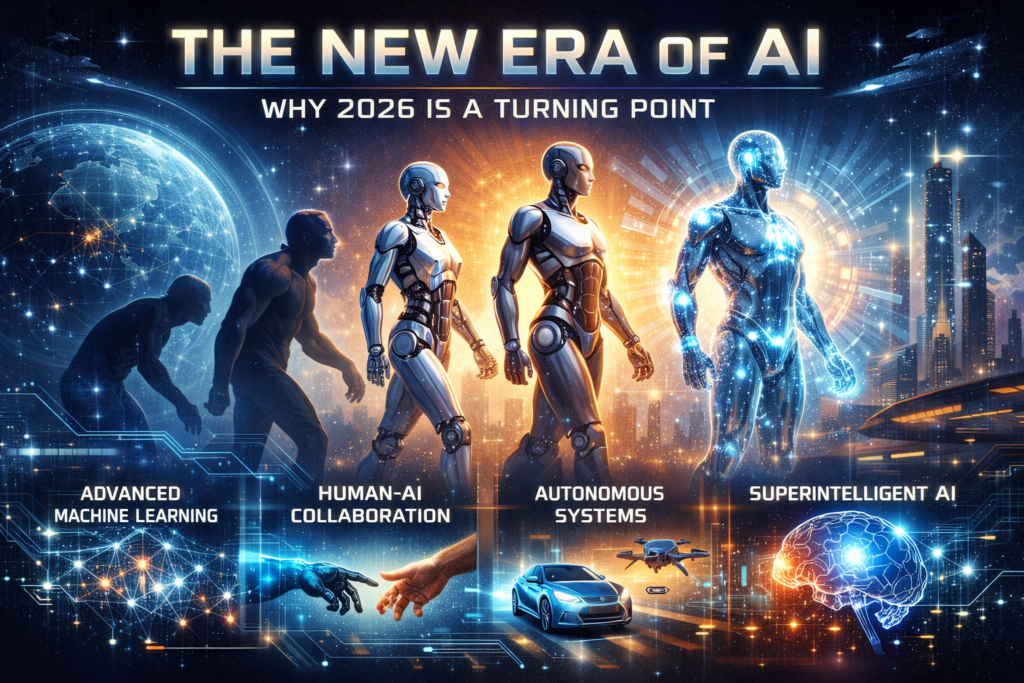
These systems are trained on more complex world models, use richer contextual memory, and combine symbolic reasoning with deep learning in ways that drastically expand their capabilities. What was once science fiction—AI acting like a true problem-solving partner—is now emerging across healthcare, research, engineering, entertainment, and everyday life. The shock isn’t that AI is improving; it’s how fast it is becoming indispensable.
1. Hyper-Personalized AI Agents Will Become Everyday Co-Workers
The biggest breakthrough in 2026 is the rise of autonomous Generative AI agents that operate continuously, not just when prompted. Powered by advanced planning models, these agents will manage tasks across applications without constant user input. Instead of simply giving answers, they will execute multi-step workflows, conduct research, analyze data, generate insights, and even negotiate on your behalf.
These agents will integrate deeply with digital ecosystems—calendars, emails, enterprise tools, creative suites—and adapt to personal habits in real time. Think of them as super-assistants with specialized skills: a marketing agent optimizing campaigns, a coding agent generating and testing entire systems, or a research agent performing literature reviews automatically.
As more platforms begin offering AI-driven automation suites, services like curated learning platforms or workflow automation tools (linked through options such as online training platforms) will make these agents accessible to everyone, from students to enterprise teams. The AI agent revolution will restructure how we work, reducing human workload while expanding creative and analytical capabilities beyond today’s limits.
2. AI Will Become a Scientific Research Partner, Not Just a Tool
One of the most surprising advancements in 2026 is AI’s growing role in scientific discovery. With breakthroughs in multimodal reasoning, AI systems can now read scientific papers, interpret graphs, analyze experiments, and design new hypotheses. Rather than simply summarizing information, these models assist researchers in making conceptual leaps.
Teams across global research institutions and companies like NVIDIA are building specialized scientific models capable of predicting molecular behaviors, discovering new materials, and accelerating drug development cycles. This has already led to early successes in computational biology and chemistry, and the pace is increasing.
In fields like genetics, climate modeling, and renewable energy systems, AI is expected to contribute meaningful discoveries that historically required years of manual work. This shift turns generative AI into a research collaborator rather than a passive reference tool, enabling breakthroughs that can impact medicine, sustainability, and global innovation.
3. Real-Time Multimodal Intelligence Will Reshape How Humans Interact With Technology
By 2026, generative AI has become deeply multimodal—processing voice, text, images, video, sensor input, and environmental data in real time. This means AI can observe, understand, and interact with the world in ways that feel natural and immediate. Users will speak to AI systems conversationally, gesture to devices, or show objects through cameras and receive context-aware responses instantly.
This evolution enables seamless integration into everyday environments. AI can now interpret live video streams, analyze body language, read emotional signals, and understand physical settings. This powers next-generation applications like interactive classrooms, ultra-personalized fitness coaching, intelligent home automation, and real-time workplace support.
Platforms offering AI-powered learning or creative environments will integrate these multimodal abilities, allowing users to produce videos, presentations, or 3D content with simple natural instructions. Multimodal AI is the bridge to truly intuitive human-machine collaboration.
4. AI-Generated Video, 3D Worlds, and Synthetic Media Will Reach Hollywood Quality
Generative AI for media is witnessing explosive growth. By 2026, AI can generate photorealistic video, immersive 3D environments, and hyper-real avatars that replicate human expressions with astonishing precision. What once required film studios and massive budgets can now be created with natural language prompts.
Behind the Scenes: How AI Makes Your Favorite Movies Stunning
This will revolutionize entertainment, advertising, gaming, and education. Production teams can use AI tools from companies like Runway or similar creative platforms to build storyboards, full scenes, and even entire animated films. Brands will generate promotional content tailored to micro-audiences, teachers will create custom learning simulations, and independent creators will produce blockbuster-level visuals with minimal resources.
How AI Is Reinventing the Entertainment Industry Forever
Synthetic media raises ethical questions, but it also unlocks unprecedented creative opportunities—and 2026 is the year it becomes mainstream.
5. Universal Multilingual AI Will Break Every Language Barrier
Generative AI is achieving near-perfect translation in dozens of languages simultaneously—including nuances, dialects, cultural context, and idiomatic meaning. This wave of multilingual intelligence transforms communication tools, education platforms, and global commerce.
Advanced translation models enable real-time speech-to-speech conversation, allowing two people speaking entirely different languages to collaborate seamlessly. In content creation, AI can generate multilingual marketing campaigns, transcribe audio, and re-voice videos in any language using synthetic voices. This creates enormous opportunities for global reach, especially when paired with affordable international communication services like business communication tools. Multilingual AI finally eliminates language as a barrier to connection, learning, and commerce.
6. AI Will Automate Entire Business Workflows—Not Just Tasks
2026 marks a fundamental shift from task automation to workflow automation. Instead of generating isolated outputs, AI systems now manage end-to-end business processes. This includes financial modeling, customer support, data analysis, onboarding workflows, cybersecurity monitoring, and even legal drafting.
AI agents integrate with enterprise platforms, APIs, and private data networks. They make decisions based on real-time data, adapt to patterns, and escalate issues only when human attention is required. This evolution is pushing companies to adopt AI automation tools at record speed, whether through enterprise automation suites or through productivity services like all-in-one workflow platforms.
The result? Businesses reduce operational costs dramatically while increasing output, consistency, and speed. AI is no longer just helping businesses—it is becoming the invisible backbone of operations.
7. Breakthroughs in AI Reasoning Will Enable True Long-Term Planning
Early AI models struggled with reasoning and planning. But by 2026, advancements in neural-symbolic architectures allow AI to build and update long-term plans, evaluating steps based on logic, feedback, and memory. This capability is essential for complex tasks like engineering, scientific research, and financial forecasting.
Modern AI systems can simulate possible outcomes, detect inefficiencies, identify constraints, and produce structured plans with explanations. Combined with autonomous agents, these systems act like strategic partners capable of mapping out entire projects, analyzing risks, and adjusting in real time. This breakthrough transforms everything from supply-chain management to climate modeling, enabling AI-assisted decision-making at a level previously impossible.
8. Ethical AI Governance Becomes a Global Priority
As AI becomes more powerful and integrated into daily life, global governments and organizations are adopting strict governance frameworks. Regulatory bodies are focusing on data privacy, model transparency, AI-generated media tracking, and responsible deployment.
Companies such as Microsoft and research institutions are contributing to new safety standards, watermarking systems for synthetic media, and guidelines for AI autonomy. The push for responsible AI ensures that innovations deliver benefits without compromising trust, ethics, or human rights. In 2026, AI ethics moves from academic discussion to real-world enforcement.
Conclusion: The Shock of 2026 Is How Naturally AI Will Become Part of Life
The most surprising part of 2026 isn’t any single breakthrough—it’s the collective realization that generative AI now touches every part of human activity. AI is becoming a strategic partner, a creative collaborator, an analytical powerhouse, and an agent of global transformation. Just as the smartphone reshaped daily life, generative AI in 2026 is pushing humanity into a new era of intelligent coexistence with technology. The future is no longer coming; it’s already unfolding—and it’s astonishing.