Introduction
The future of creativity has quietly arrived—and it starts with a sentence. Imagine typing a simple line like “a futuristic city floating above the clouds” and, within seconds, receiving breathtaking, fully realized, and stunning images. This isn’t magic—it’s the power of AI text-to-image generation. Systems like Stable Diffusion, Midjourney, and DALL·E have transformed how we create visuals, empowering anyone—designers, marketers, students, creators, business owners—to turn pure imagination into vivid, high-quality artwork.
As these models become smarter and more accessible, they’re reshaping not just digital art but storytelling, branding, entertainment, product design, and even education. In this detailed guide, you’ll discover how these AI engines work, why they’re revolutionary, and how you can harness them to bring your own ideas to life.
Understanding Text-to-Image AI: A New Era of Visual Creation
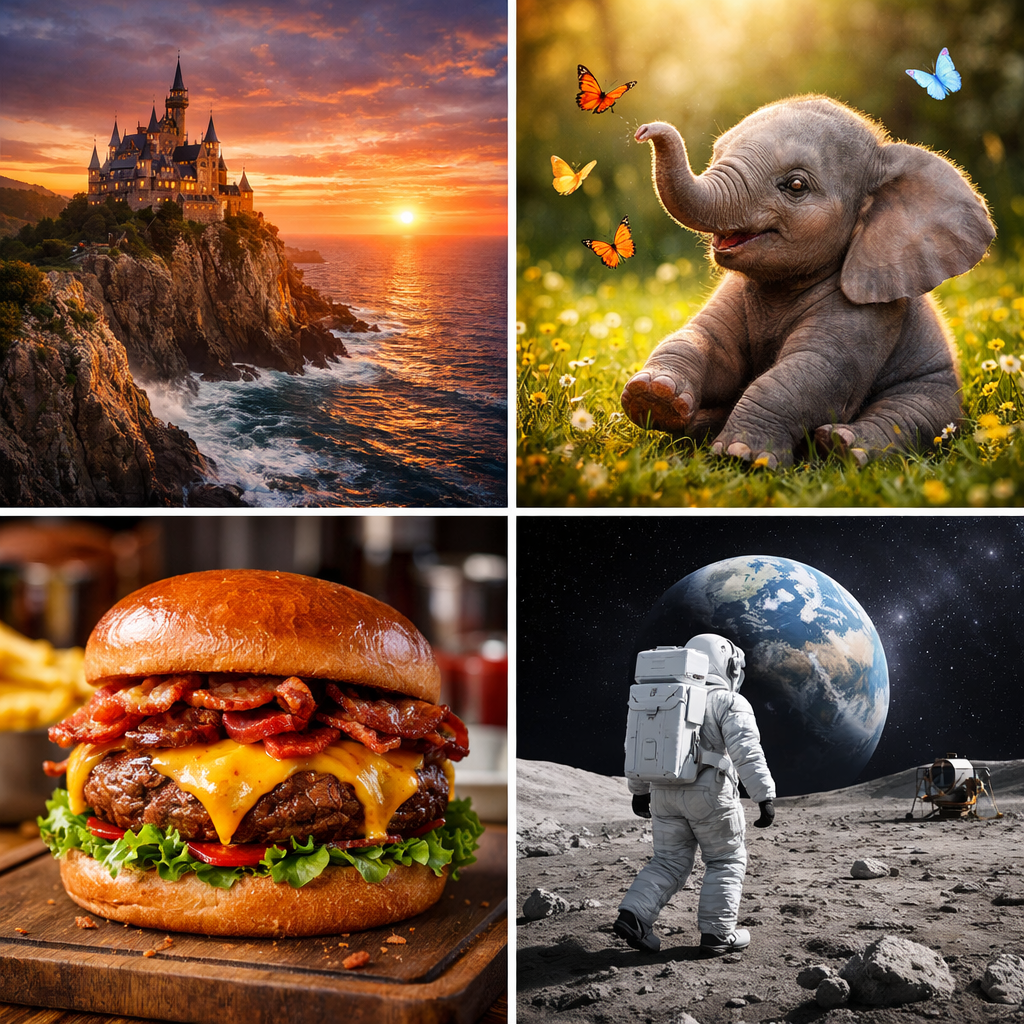
Text-to-image AI describes a category of generative models designed to convert natural language prompts into images. These systems interpret your text, understand context, objects, styles, emotions, and relationships between elements, and then generate visuals pixel-by-pixel. While early models struggled with coherence, modern systems have reached a point where they can produce hyper-realistic art, cinematic scenes, digital paintings, and even detailed product mockups.
Thanks to advances in deep learning, diffusion models, and massive datasets, AI now understands language and aesthetics with unprecedented accuracy. Many creators use tools like image upscalers, prompt-engineering guides, and workflow automation platforms such as creative AI toolkits to maximize results.
How Text-to-Image Systems Actually Work (Explained Simply)
Beneath the surface, these models rely on concepts such as large-scale training, image-text pairs, and diffusion—a process in which images are gradually refined from noise. When you enter a prompt, the model maps your text into a high-dimensional space, compares it to patterns learned from millions of images, and reconstructs a new visual representation that best matches your words. The more detailed your prompt, the more controlled the results. Some platforms even allow prompt weighting, style references, negative prompts, and custom training to fine-tune outcomes.
Advanced workflows often integrate tools for editing, compositing, and vectorizing images, many of which can be found in AI design suites or creative editing ecosystems. These additional layers enhance accuracy and unlock professional-grade results.
Stable Diffusion: The Open-Source Engine Powering AI Creativity
Stable Diffusion revolutionized AI art by being open-source and highly customizable. Users can download the entire model, train it on their own images, modify its internal settings, and even create unique versions tailored to specific tasks. This level of freedom has turned Stable Diffusion into the backbone of many creative pipelines—from indie game art to corporate workflows.
With Stable Diffusion, creators can:
- Train custom models to match specific art styles
- Build character-consistent images
- Create realistic product shoots without a studio
- Generate concepts for architecture, interior design, and film scenes
- Run the model offline without internet restrictions
Because of its flexibility, innovators use workflow platforms like Airtable to organize prompts, image outputs, and automated AI pipelines. Businesses, in particular, benefit from the cost-effectiveness, privacy control, and scalability of Stable Diffusion.
Also Read: AI-Powered Creativity: How Machines Generate Art That Inspires
Midjourney: The Artist’s Dream Engine
Midjourney takes a different approach—prioritizing beauty, aesthetics, and emotional impact. It has become immensely popular because it consistently produces visually stunning compositions with rich details and stylistic coherence. Everything from lighting, texture, colour harmony, and perspective looks naturally artistic, making it ideal for creators who want professional visuals with minimal technical adjustments.
Midjourney is used for:
- High-end concept art
- Branding and marketing visuals
- Editorial illustrations
- Product scenes and lookbooks
- YouTube thumbnails, Instagram graphics, Pinterest pins
- Fantasy, futuristic, and surreal artwork
Though it runs primarily through Discord, its workflow is surprisingly simple: you type a command, add your prompt, and Midjourney handles the rest. The output often looks like something produced by a world-class digital artist. Many creators further edit Midjourney results using platforms such as Envato Elements for templates, resources, and visual enhancement.
DALL·E: The Most “Intelligent” Text-to-Image System
DALL·E by OpenAI is known for intelligence, accuracy, and a deep understanding of language and context. It can interpret nuanced prompts, follow complex instructions, and create images that resemble realistic photography, cartoons, paintings, or completely abstract concepts. It also excels in editing existing photos using natural language—something known as “inpainting.”
The latest DALL·E versions have improved composition, human anatomy, typography, realism, and fidelity to prompt instructions. What sets it apart is its seamless integration into tools like ChatGPT, allowing conversational refinement, variations, and instant editing instructions—perfect for marketers, educators, social media creators, and product designers.
DALL·E excels in:
- Photorealistic imagery
- Editing existing photos using natural-language instructions
- Adding objects, removing objects, or altering scenes
- Producing consistent branding elements
- Creating character illustrations
- Executing long, complex, descriptive prompts
Its “inpainting” and “outpainting” capabilities allow users to modify and extend images with seamless precision—making it ideal for marketing, publishing, education, and product design workflows.
Why Text-to-Image AI Matters for Creators and Businesses
AI-generated visuals are not just cool—they’re becoming essential. Businesses use them for campaigns, ad creatives, product mockups, and branding materials. Content creators use them to produce engaging thumbnails, blog illustrations, Instagram visuals, and short-form videos. Educators and storytellers use AI images to explain concepts, create storyboards, and build visual narratives. Startups rely on these tools to save time and dramatically reduce design costs.
In a world where visuals dominate digital communication, text-to-image AI eliminates the barriers of skill and software complexity. You don’t need to be a designer or artist—you just need to describe your idea. This democratization of creativity is one of the most transformative technological shifts since the invention of digital photography.
Key areas where text-to-image AI delivers major value:
- Marketing: Campaign graphics, ad banners, brand concepts
- E-commerce: Product previews, lifestyle mockups, catalogue images
- Education: Study guides, illustrations, explainer images
- Filmmaking: Previsualization, concept art, mood boards
- Architecture: 3D-like renders, environment concepts
- Gaming: Character creation, world design, textures
- Publishing: Book covers, story scenes, editorial illustration
What used to take hours—or even teams—is now possible in minutes, dramatically accelerating the creative process.
Mastering the Art of Prompt Writing
The difference between an average AI image and an extraordinary one often comes down to prompt quality. A well-crafted prompt gives the model structure, clarity, and artistic direction.
Here’s the formula many professionals use:
Subject + Details + Environment + Style + Lighting + Mood + Lens/Camera/Art Technique
Example:
A majestic white tiger walking through a neon-lit forest, glowing haze, ultra-realistic, cinematic lighting, 85mm photography, high detail, soft contrast.
Tip: Experimentation is important. Many creators rely on prompt-engineering tools to improve prompt structure and expand creative possibilities.
Real-World Use Cases: Where These Tools Shine
As AI continues evolving, its influence expands into industries once thought unrelated to automation.
Film & Production
Directors now generate moodboards, costumes, props, settings, and even entire scenes visually before real production begins.
Advertising
Agencies rapidly prototype dozens of visual concepts within minutes rather than waiting for full design cycles.
Education & Research
Teachers create diagrams, illustrations, and story visuals to enhance learning experiences.
Product Design & Innovation
Businesses test packaging ideas, prototypes, and product styles before manufacturing.
Personal Content Creation
Influencers produce thumbnails, posters, digital wallpapers, and portraits tailored to their brand identity.
Text-to-image AI isn’t just an add-on—it’s becoming integral to modern digital output.
Conclusion: The Future of Text-to-Image AI
The next phase of AI art is even more transformative. Expect:
- Real-time image generation from video prompts
- AI-generated videos and animations from simple descriptions
- 3D model creation directly from text
- Entire virtual worlds generated for gaming and VR
- Photorealistic humans indistinguishable from real models
- Interactive storytelling with AI-generated scenes on demand
Soon, creativity will feel more like a conversation with a digital collaborator—an AI that understands your ideas intuitively and can turn them into polished visuals instantly.