Introduction
In a world where algorithms compose symphonies, generate hyper-realistic portraits, and design futuristic landscapes, one question keeps echoing across creative and tech communities: How are machines suddenly capable of producing art that feels so deeply human? Today’s AI doesn’t just replicate patterns—it creates, reimagines, and sometimes surprises even its own creators.
With powerful generative models shaping industries, inspiring professionals, and fueling innovation at scale, AI-art generation is no longer a novelty—it’s a creative revolution. Whether you are an artist, tech enthusiast, entrepreneur, or someone simply fascinated by the fusion of creativity and code, understanding how AI generates art is essential to navigating the future of creativity.
What Exactly Is AI-Generated Art?
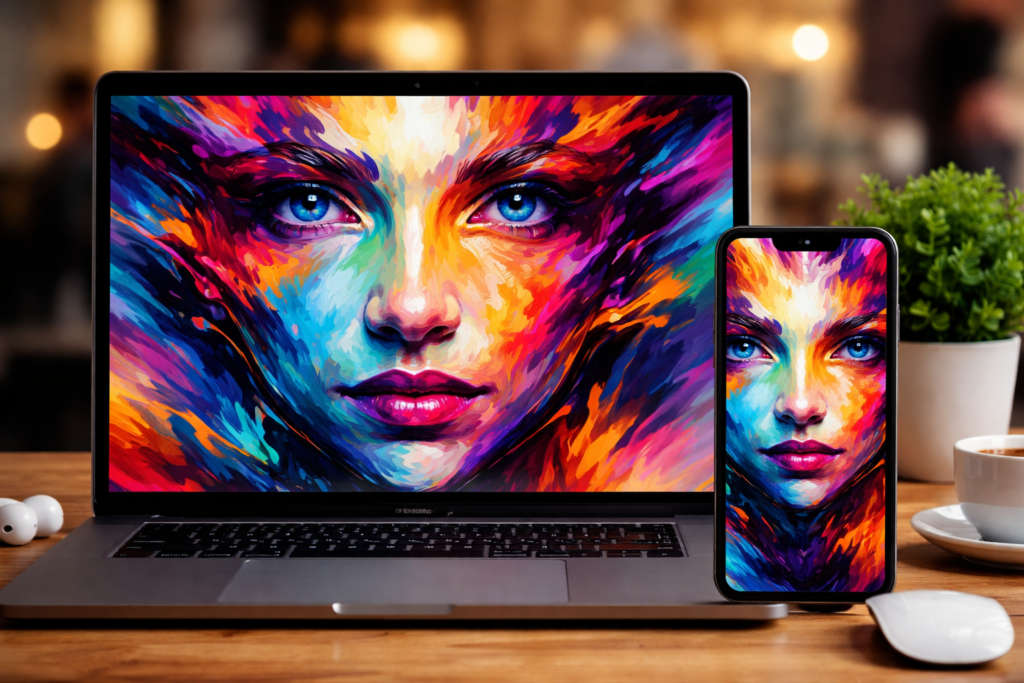
AI-generated art refers to any artwork—images, illustrations, designs, or mixed media—created with the assistance of artificial intelligence algorithms. These systems analyze enormous datasets of existing visual content, learn underlying structures, and then produce new images through mathematical modeling. What fascinates many is that AI art is not copied; it is generated, using probabilistic and generative techniques that yield original outcomes.
For creators and designers, AI opens doors to producing detailed concept art, rapid prototypes, and infinite creative variations in just seconds. Platforms like “text-to-image generators” allow users to input short or elaborate prompts describing a scene, and the model outputs a complete artwork. Professional designers frequently integrate these outputs into workflows for branding, character design, architecture mockups, and digital storytelling. Tools available on platforms like this AI art suite and creative asset libraries make advanced AI-generated visuals accessible even to beginners.
The Core Models Behind AI Artwork Generation
AI art relies on several breakthrough machine learning architectures. Each model type contributes differently to creativity, realism, and stylistic flexibility. Below are the main engines powering modern generative art:
1. Generative Adversarial Networks (GANs)
GANs are among the earliest breakthroughs in AI-generated art. They consist of two neural networks—the Generator and the Discriminator—engaged in a creative competition. The generator creates images, while the discriminator critiques them and tries to identify which are real versus machine-made. Over many iterations, the generator improves until it produces artwork indistinguishable from human-created images.
GANs are well-known for:
- Hyper-realistic portraits
- Style-transfer art
- Surreal and abstract creations
- Photorealistic landscapes
- Fashion and design prototypes
They are particularly powerful when trained on specific artistic styles, enabling models to replicate the textures and brush strokes associated with master painters.
2. Diffusion Models
Diffusion models dominate today’s AI-art landscape. Models such as Stable Diffusion, DALL·E, and other similar systems operate on a principle of noise removal. They start with random visual noise and gradually refine it into a coherent image by following the structure of the prompt.
Why diffusion models are preferred:
- Superior image clarity
- Fine control of lighting and texture
- Better coherence in complex scenes
- Ability to understand long prompts and multi-concept instructions
Diffusion models also allow developers and artists to train “custom models,” embedding personal datasets to generate consistent characters, branded assets, or stylistic templates. If you want to explore tools built on diffusion technology, platforms like this creative AI toolset offer user-friendly interfaces to experiment with.
3. Large Vision-Language Models (VLMs)
Newer AI models combine vision and language processing to understand not just what an image looks like but why it looks that way. Vision-language models map text instructions to visual representations, enabling:
- Complex scene generation
- Multi-image storytelling
- Context-driven composition
- Precise style and object placement
These models—often powering the latest text-to-image features—benefit from enormous training datasets, giving them the ability to interpret creative descriptions with increasing nuance.
4. Neural Style Transfer (NST)
Neural style transfer was one of the first AI techniques to gain widespread popularity. It blends the content of one image with the style of another—for example, turning a photograph of a city into a painting that looks like it was created by Vincent van Gogh or Claude Monet.
While modern diffusion models offer more flexibility, NST remains useful for:
- Quick stylization
- Texture blending
- Artistic reinterpretation of existing images
- App-based filters seen in mobile editing tools
5. Transformer Models for Creativity
Transformers revolutionized AI text generation—and their architectural principles now power visual creativity. Diffusion models use transformer variants to interpret prompts, maintain scene coherence, and generate images that follow linguistic nuance.
Transformers help AI understand:
- Spatial relationships
- Artistic composition
- Perspective structure
- Symbolism and narrative cues
This enables generative AI to create images that follow storytelling logic rather than simply mimicking visual patterns.
How AI Art Generation Works: Step-by-Step
Understanding the workflow helps you see where creativity is encoded within AI.
Step 1: Input Prompt Processing
When a user enters a prompt, the AI model transforms text into encoded vectors—numerical representations that capture meaning, style, and intent.
Models interpret concepts like “vintage neon cyberpunk city at night”, breaking it down into themes, moods, colors, and compositions.
Step 2: Noise Sampling
Diffusion models begin with a pure noise image—essentially random pixels.
Step 3: Iterative Denoising
The system executes multiple steps of noise removal:
- Sharpening shapes
- Applying textures
- Adjusting colors
- Refining details
Each iteration pushes the image closer to the desired result.
Step 4: Style, Composition & Fine-Tuning
The model aligns the output with reference patterns learned from training data. It arranges perspective, lighting, and artistic elements.
Step 5: Final Rendering
After dozens or hundreds of refinement cycles, the AI produces the final image—often in seconds.
Why AI Art Feels So “Creative”
AI creativity stems from mathematical exploration, pattern synthesis, and probabilistic imagination—not from consciousness. But the results often seem emotionally expressive.
AI feels creative because:
- It combines concepts in unexpected ways
- It draws from huge and diverse datasets
- It can amplify abstract or surreal patterns
- It generates variations instantly, enabling serendipity
- It produces exceptionally crisp detail
Creativity emerges from the staggering number of possible image combinations. Even the model creators cannot fully predict the exact output of each prompt—giving AI a sense of spontaneity.
Benefits of AI Generative Art in Modern Creative Workflows
1. Fast Concept Development
Artists can produce idea boards, quick sketches, or elaborate drafts in minutes. AI accelerates prototyping and ideation, especially for content-heavy projects like filmmaking, game design, and branding.
2. Affordable Creative Production
AI tools make high-quality artistry accessible even to solo creators and small businesses. Platforms like this design automation tool provide ready-to-use AI-assisted templates, lowering production costs dramatically.
3. Enhanced Creative Exploration
AI allows creators to try multiple styles—from watercolor and anime to hyperrealism—without needing decades of specialized practice.
4. Democratization of Design
Anyone with a prompt can participate. You don’t need traditional artistic training to generate compelling visuals.
5. Productivity at Scale
Marketing teams use AI to create:
- Ad creatives
- Social media assets
- Product mockups
- Branding variations
What once required hours now takes seconds.
Ethical Considerations in AI Art
While AI art is inspiring, it also comes with important ethical discussions:
- Training data: Models learn from publicly available images, raising debates about fair use.
- Artistic credit: Should creators of training images be compensated?
- Authenticity: What qualifies as “real art”?
- Misuse: AI can be used to produce deepfakes or misleading visual content.
These questions shape the future of AI ethics and help guide responsible AI development.
The Future of AI-Generated Art
As models improve, expect:
- Real-time art generation with photorealism
- Personalized models trained on your taste
- Cross-modal creativity (audio + visuals + text)
- AI-assisted filmmaking, animation, and storyboarding
- 3D model and AR/VR asset generation
AI will increasingly work with humans—not replace artists. The true future lies in hybrid creativity: human imagination + machine precision.