
Introduction
From Scriptwriting to Music Production — The Future of Creativity Has Officially Arrived
The entertainment world is standing at the edge of a revolution—one not led by famous directors or legendary musicians, but by powerful algorithms quietly reshaping how stories are told, songs are produced, and audiences are understood.
In a world where technology evolves faster than trends, Artificial Intelligence has become the invisible co-creator behind blockbuster films, chart-topping music, and personalized entertainment experiences.
What was once considered futuristic—movie scripts written by machines, digital stars performing without human actors, AI-powered music composition, and analytics predicting audience emotions—is now an everyday reality. And the most surprising part? The transformation has only just begun.
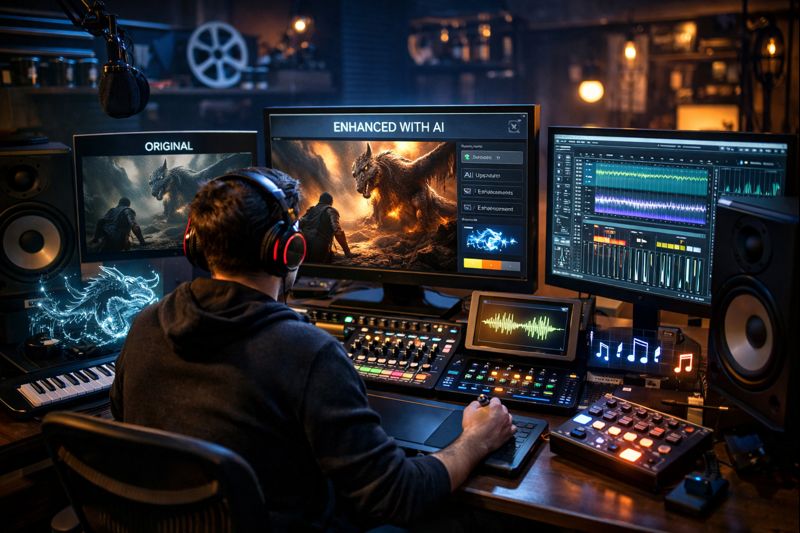
AI in the Music Industry: A New Creative Partner for Artists
The music industry has always been a playground for innovation—from vinyl to streaming—but AI is pushing creativity to a level that traditional tools could never reach. Modern musicians, producers, and creators now rely on machine-learning systems to assist with composition, mixing, mastering, and even generating entire melodies and harmonies in seconds. Platforms like Suno, AIVA, and Amper Music are enabling both beginners and professionals to translate ideas into polished soundtracks instantly.
AI-powered tools analyze millions of songs across genres, extracting patterns of rhythm, pitch, structure, and emotional tone. This allows creators to generate background scores, draft song structures, or experiment with new musical styles that may take hours to conceptualize manually. The technology isn’t meant to replace human creativity—it’s designed to expand it, offering inspiration and serving as a collaborative engine.
Advanced mastering systems such as LANDR and smart tools integrated into digital audio workstations can also recommend EQ settings, dynamic improvements, and spatial effects, creating a studio-quality output accessible to anyone with a laptop. Beginners who want to explore creative tools can check premium platforms through affiliates like this music production suite (https://www.adobe.com/products/audition.html) or experiment with AI composition tools (https://www.soundtrap.com/) that reduce the technical barriers to music creation.
Whether it’s emerging artists producing their first track or global stars seeking fresh ideas, AI is democratizing music production and shaping the next era of audio innovation.
AI Is Transforming Film Industry: Smarter Shoots, Faster Edits, Bigger Ideas
In filmmaking, AI has moved beyond special effects and into the core stages of production. Modern directors now use AI-driven solutions for script analysis, scene breakdowns, camera movement suggestions, and post-production enhancements. Machine learning helps identify continuity issues, optimize lighting, and even generate realistic CGI effects that previously required massive budgets.
One of the biggest disruptions is happening in AI-powered editing. Software like DaVinci Resolve and Adobe’s Sensei tools can automatically detect scenes, color-correct footage, remove background noise, and even generate rough cuts—tasks that once took hours or days. Filmmakers can now upload raw footage and receive an AI-assisted edit that provides a strong creative foundation.
AI is also revolutionizing casting and character design. With deepfake technologies and digital humans, filmmakers can recreate actors at younger ages, generate lifelike virtual characters, or complete unfinished scenes with consent-based digital doubles. These advancements save time and improve storytelling flexibility—without breaking immersion for audiences.
Moreover, advanced VFX tools allow studios to create high-budget scenes without massive crews. For example, Unreal Engine’s AI-driven environments can generate dynamic, photorealistic worlds, making filmmaking cheaper and more accessible. Hollywood is already embracing these innovations; independent creators are now doing the same.
For new filmmakers or aspiring editors, exploring tools like this AI-powered video editor or learning through online creative programs (https://www.coursera.org/) can kickstart their journey into the future of cinema.
AI in Scriptwriting: From Creative Assistant to Story Architect
AI-driven writing systems have become valuable partners in storytelling. While human imagination remains irreplaceable, AI tools can generate plot outlines, suggest dialogues, and even create full drafts of scripts based on genre, tone, or character dynamics. This doesn’t diminish creativity—it accelerates it.
Screenwriters today use AI to:
- Overcome writer’s block
- Test alternate endings
- Strengthen character arcs
- Analyze pacing and emotional flow
- Predict audience responses to certain storylines
Large language models, trained on millions of scripts and stories, understand narrative structures in ways that allow them to act as intelligent brainstorming assistants. They provide variations, help refine plot logic, and maintain consistency across acts.
AI also supports pre-production analysis by identifying script elements that affect costs—such as number of locations, stunts, or special effects—helping producers budget more efficiently. These tools enhance collaboration between writers, directors, and editorial teams, making the entire pipeline more agile.
For storytelling students or professional writers, exploring AI writing assistants can help refine ideas and increase productivity.
AI in Entertainment Analytics: Predicting What Audiences Want Before They Want It
Behind the scenes, the entertainment industry relies heavily on analytics—and AI has turned audience insights into one of the most valuable creative tools. Streaming platforms like Netflix, Prime Video, and Spotify use machine-learning models to analyze billions of engagement points, from viewing patterns to listening mood preferences.
These insights help companies:
- Predict hit movies and songs
- Recommend personalized content
- Decide which actors or musicians best match audience demand
- Optimize release schedules
- Enhance marketing campaigns
AI-powered algorithms don’t just measure behavior—they understand it. They detect emotional preferences based on what people pause, skip, or replay. This helps studios create content backed by real psychological patterns rather than guesswork.
Advanced sentiment analysis tools track conversations across social media platforms, helping entertainment brands stay updated on trends and consumer expectations. This ability to interpret real-time feedback allows creators to evolve instantly, making entertainment more interactive and audience-driven than ever.
Even independent creators can benefit from analytics by exploring affordable tools for tracking engagement, growing audiences, and optimizing content performance.
Digital Stars, Virtual Influencers & AI-Powered Performers
AI hasn’t just changed how content is created—it has introduced brand-new forms of entertainers. Virtual influencers, digital models, and AI-generated performers are now collaborating with global brands, starring in campaigns, and even hosting live virtual concerts.
These digital personalities are crafted using AI-powered motion capture, deep learning, voice synthesis, and 3D rendering. They can work 24/7, never age, and adapt styles instantly. Companies use them for marketing because they combine creativity with precision branding.
In music, AI-generated artists release songs and music videos created entirely through algorithms. In gaming, AI-driven NPCs evolve based on player behavior, making experiences more dynamic. In film, virtual actors appear as background extras or even main characters for specific genres.
This shift raises questions about ethics and authenticity, but it also opens exciting creative possibilities where human and machine creativity coexist.
The Future: A Human–AI Creative Alliance
The future of entertainment is not about AI replacing human artists—it’s about amplifying their creative power. Every innovation discussed here points to a future where humans provide emotion, vision, and artistic meaning, while AI provides speed, precision, and limitless possibilities.
We’re heading toward an era where:
- Filmmakers shoot entire scenes in virtual studios
- Musicians collaborate with AI partners
- Writers generate plot ideas instantly
- Streaming platforms predict what fans want next
- Fans interact with intelligent virtual celebrities
AI will continue to evolve, but so will human innovation. The synergy between both will define the next golden age of entertainment.
📚 Related Article
How AI Is Transforming Education in 2026: A New Era of Learning, Teaching & Human Connection