
How to Use AI to Create YouTube Videos Fast
Introduction
Creating YouTube videos no longer requires expensive cameras, studios, or long editing hours. With the rise of Artificial Intelligence (AI), anyone—from students and professionals to solo creators—can produce high-quality YouTube videos quickly and consistently. AI tools now handle almost every stage of the video creation process, from idea generation and scripting to voiceovers, visuals, editing, and even publishing.
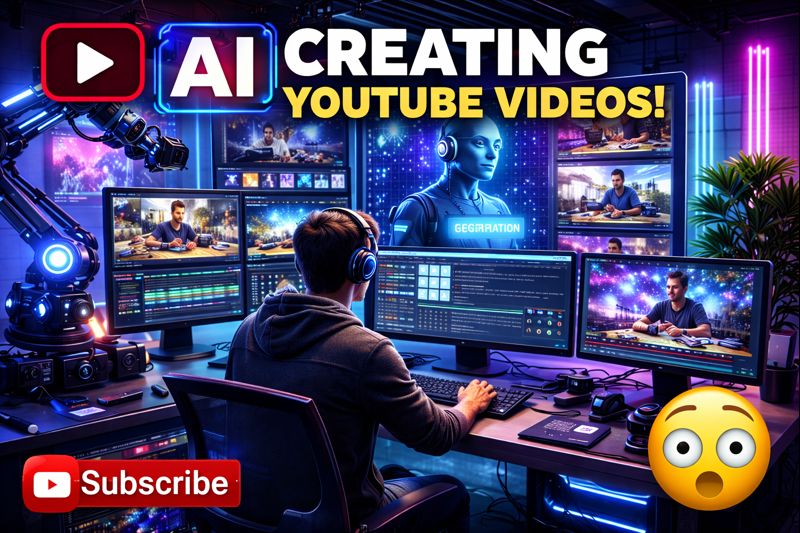
In this blog post, you’ll learn how to use AI to create YouTube videos fast, step by step. This guide is SEO-friendly, plagiarism-free, and written for beginners as well as advanced creators who want to scale their YouTube channels efficiently.
Why AI Is Transforming YouTube Content Creation
AI has changed the YouTube ecosystem by removing traditional barriers like technical skills, time constraints, and high costs. Earlier, creating a single video could take days. Today, AI can help you do it in minutes.
The biggest advantages of AI-powered YouTube creation include faster production, consistent output, reduced costs, scalability, and accessibility for non-technical users. Whether you’re building a faceless YouTube channel, an educational channel, or a brand-focused channel, AI gives you a competitive edge.
Step 1: Finding YouTube Video Ideas Using AI
Before creating a video, you need a strong idea that people are actually searching for. AI tools analyze trends, keywords, and audience behavior to help you select topics with high potential.
Platforms like ChatGPT, TubeBuddy, and vidIQ can suggest trending topics, generate content ideas, and even predict how well a video might perform.
AI-powered ideation ensures your content aligns with search demand, increasing discoverability and watch time.
Step 2: Writing YouTube Scripts with AI
Once you have an idea, the next step is scripting. A good script keeps viewers engaged and improves retention. AI writing tools can generate complete YouTube scripts within seconds.
Using tools like ChatGPT, creators can generate hooks, introductions, main content, calls to action, and even storytelling-style scripts. You can specify tone, length, audience type, and niche to get tailored results.
AI-written scripts save time and help maintain consistent quality across multiple videos, making them ideal for daily or bulk content production.
Step 3: Creating AI Voiceovers for YouTube Videos
Recording your own voice isn’t always practical, especially for faceless channels or creators who prefer automation. AI text-to-speech tools now offer realistic human-like voices.
Popular AI voice generators like ElevenLabs, Murf AI, and Play.ht allow you to convert scripts into professional-quality voiceovers in multiple languages and accents.
These tools are widely used for explainer videos, motivational content, educational channels, and storytelling videos.
Step 4: Turning Scripts into Videos Using AI
This is where AI truly shines. AI video generation tools can transform text and voice into complete videos with visuals, animations, stock footage, and transitions.
Platforms like Pictory, InVideo, and Synthesia let you create videos without manual editing. You simply upload your script or voiceover, and the AI matches it with visuals, captions, and transitions.
These tools are especially effective for:
- Educational videos
- News summaries
- Product explainers
- Faceless YouTube channels
Step 5: AI-Generated Visuals and B-Roll
High-quality visuals improve viewer engagement. AI tools can automatically select stock images, video clips, animations, and background scenes that match your script.
Some platforms also integrate generative AI visuals, allowing creators to generate unique images instead of using common stock footage. This helps reduce copyright risks and makes videos more original.
AI-powered visual generation ensures your videos remain visually appealing without spending hours searching for assets.
Step 6: Automatic Video Editing with AI
Video editing used to be the most time-consuming part of YouTube creation. AI now automates trimming, transitions, background music, subtitles, and formatting.
AI editors analyze your content to remove pauses, align visuals with narration, and even apply cinematic effects. Tools like Descript and Runway allow editing videos as easily as editing text.
This significantly reduces production time and improves consistency across your channel.
Step 7: Creating AI Thumbnails for Higher CTR
Thumbnails play a critical role in YouTube success. AI design tools help generate eye-catching thumbnails optimized for clicks.
Using tools like Canva and AI image generators, creators can produce professional thumbnails with bold text, expressive visuals, and proper contrast—all without design skills.
AI-based thumbnail testing can also help determine which design is more likely to perform better.
Step 8: Optimizing Titles, Descriptions, and Tags with AI
SEO is essential for YouTube growth. AI tools analyze keywords, competitors, and search intent to generate optimized titles, descriptions, and tags.
With AI, you can:
- Write keyword-rich titles
- Generate long-form descriptions
- Add relevant tags automatically
- Improve click-through rate (CTR)
This optimization increases visibility in YouTube search and recommendations.
Step 9: Publishing and Scheduling with AI
AI doesn’t stop at creation. Many tools help automate video uploads, scheduling, and even performance tracking. AI-based analytics provide insights into viewer behavior, retention, and engagement.
Creators who rely on AI workflows can maintain consistent upload schedules, which is crucial for YouTube’s algorithm.
Step 10: Scaling a YouTube Channel Using AI Automation
One of the biggest advantages of AI is scalability. You can produce multiple videos daily by combining:
- AI script writing
- AI voiceovers
- AI video generation
- AI thumbnails
- AI SEO optimization
This approach is widely used for monetized niches like education, motivation, finance, facts channels, and explainer content.
Best Types of YouTube Channels to Build with AI
AI-powered creation works exceptionally well for:
- Faceless YouTube channels
- Educational and explainer channels
- Motivation and quotes channels
- Tech and AI news channels
- History, science, and facts videos
These formats rely more on information and storytelling than on personal appearance.
Common Mistakes to Avoid When Using AI for YouTube
While AI is powerful, over-automation can reduce originality. Avoid publishing raw AI-generated content without customization. Always review scripts, adjust visuals, and maintain a consistent brand voice.
YouTube values value-driven content, so human oversight remains essential.
The Future of AI-Powered YouTube Videos Creation
AI tools are evolving rapidly. Future advancements will include real-time video generation, advanced personalization, multilingual automation, and smarter audience targeting.
Creators who adopt AI early will have a significant advantage in producing content faster and more efficiently than traditional methods.
Final Thoughts
Using AI to create YouTube videos fast is no longer a trend—it’s a standard practice among modern creators. From idea generation and scripting to voiceovers, visuals, editing, thumbnails, and SEO, AI simplifies the entire workflow.
By combining the right AI tools with creativity and strategy, you can build, grow, and scale a successful YouTube channel with minimal resources and maximum efficiency.
If you’re serious about YouTube videos’ growth in 2026 and beyond, mastering AI-powered video creation is not optional—it’s essential.