
Introduction: How AI Knows Exactly What You Want to Watch
Have you ever wondered how, out of thousands of shows and movies, Netflix somehow always manages to place the right one in front of you—right at the moment you’re ready to watch something new? It feels almost psychic. Yet behind this seemingly magical experience lies a sophisticated mix of artificial intelligence, machine learning, behavioral analytics, and massive data pipelines working every second you browse.
The recommendation system you see is only the tip of an enormous technological iceberg, and what’s happening underneath is far more powerful, far more personal, and far more intentional than most viewers realize. In this article, we’ll pull back the curtain and explore the secret algorithms, hidden models, and ranking engines that make your Netflix homepage feel tailor-made for YOU.
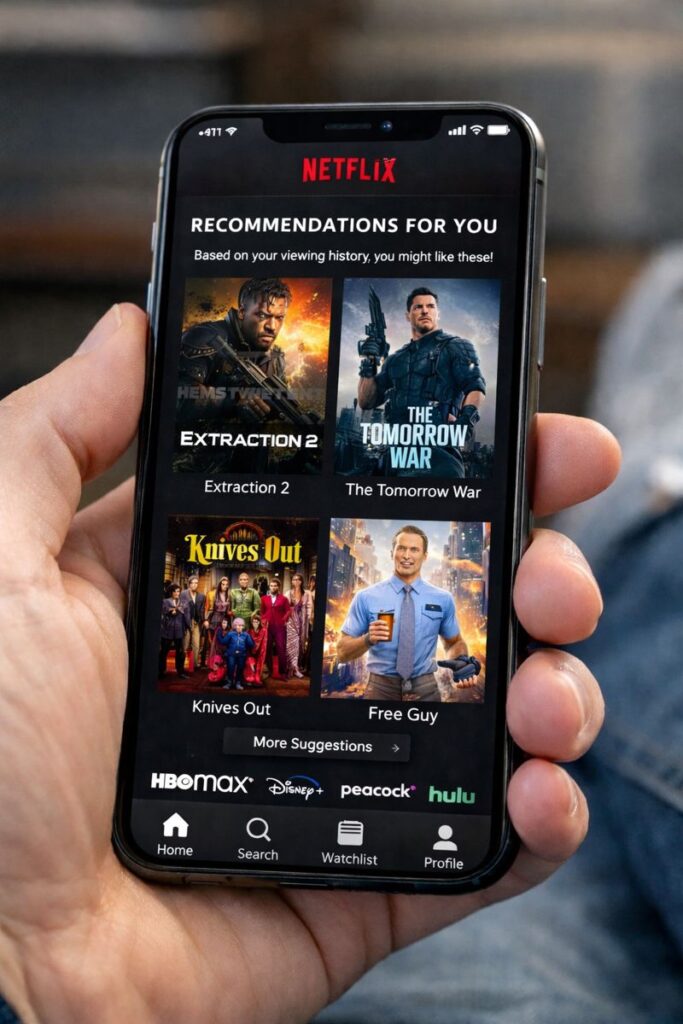
Why Netflix Needs Such Powerful AI: A Glimpse Behind the Curtain
To understand why recommendation algorithms matter so much, you must first understand the scale of attention competition in today’s streaming world. With countless platforms providing endless content, capturing viewer attention is harder than ever. Netflix’s AI aims to solve this by reducing “decision fatigue,” predicting what you will enjoy, and serving it instantly. Most users spend less than 60–90 seconds searching before giving up and leaving the app. Netflix’s AI exists to ensure that never happens.
This is also why many readers, creators, and tech professionals explore advanced analytics and machine learning tools for media optimization—platforms like data visualization suites and marketing intelligence dashboards (affiliate link: professional analytics tools) help content strategists understand viewer engagement in a similar way.
How Netflix Collects Data to Understand You
The recommendation engine begins with data—lots of it. Netflix gathers an enormous range of signals about your viewing behavior. This includes obvious actions like:
- What you watch
- When you watch
- How long you watch
- When you pause, rewind, or skip
But it also includes subtle behavioral signals like:
- The type of device you use
- Interaction patterns with trailers
- Your browsing speed
- Your day-of-week watching habits
- Your “re-watch probability”
This data is anonymized and fed into machine learning systems to create what is essentially a dynamic, constantly evolving personal entertainment fingerprint. This is not simple personalization; it is advanced behavioral modeling deeply integrated into Netflix’s global content strategy.
Collaborative Filtering: Learning From People Like You
One of the classic algorithms powering Netflix’s system is Collaborative Filtering, which finds similarities between users. Here’s how it works:
- Netflix compares your viewing history with millions of other users.
- It identifies patterns among viewers who enjoy similar genres, themes, actors, and story styles.
- It uses these patterns to predict what you might enjoy next.
For example, if you’ve watched a series of crime thrillers, the system doesn’t just recommend more crime videos—it finds the specific sub-patterns of those thrillers: pacing, mood, narrative complexity, emotional tone, and more. Then it determines which similar shows other users with your pattern enjoyed.
Collaborative filtering is the backbone of most recommendation systems. Even if you’re building your own AI-based projects, similar techniques can be implemented using tools like machine learning frameworks (affiliate link: AI model libraries) for studying real-world recommendation engines.
Content-Based Filtering: Understanding the Show Itself
The next layer is Content-Based Filtering, where AI analyzes the content attributes of every movie or show. Netflix uses Natural Language Processing (NLP), computer vision, and audio analysis to break down:
- Genre and subgenre
- Script and dialogue complexity
- Visual style and color palette
- Music and background score
- On-screen emotions
- Scene pacing and structure
Each title has hundreds of metadata tags, many of which are generated automatically by AI. For example, Netflix’s internal system known as “The Netflix Tagger” assigns extremely fine-grained tags like:
- “Dark psychological drama”
- “Fast-paced action with emotional undertones”
- “Feel-good, youth-centric, character-driven”
This allows the algorithm to match content to your personal preferences with astonishing accuracy—even if the title is brand new and you’ve never heard of it.
The Neural Networks Behind Netflix’s Personalization
In recent years, Netflix has increasingly shifted toward deep learning, using neural networks to analyze patterns far too complex for traditional models.
These neural networks learn hidden relationships between:
- Titles
- User profiles
- Behavior patterns
- Watch-time predictions
- Global engagement trends
Deep-learning models help Netflix identify nuanced signals such as:
- Subtle shifts in your genre preference over time
- The emotional tone you gravitate toward
- The type of content you binge vs. casually watch
- How your mood might change based on time of day
These models allow Netflix to treat every user as a moving, evolving target—because your preferences today are not the same as your preferences six months ago.
Deep learning systems are extremely resource-intensive, which is why many AI engineers rely on cloud-based GPU platforms (affiliate link: cloud compute solutions) to run experimentation at scale.
The Ranking Algorithm: The Secret Sauce
Once Netflix has predicted the titles that might interest you, the next step is ranking them. Netflix doesn’t just recommend titles—it prioritizes them.
Ranking considers:
- Probability of you clicking
- Probability of you finishing
- Probability of you binge-watching
- Similar users’ watch behavior
- Global popularity (weighted, not dominant)
- Freshness and recency
Netflix optimizes for engagement, not just clicks. A title that you might click but abandon after five minutes will rank lower than one the system believes you will watch for hours.
This ranking process is recalculated every time you refresh your homepage. That’s why sometimes a title will appear, disappear, and reappear based on your behavior.
Artwork Personalization: Yes, Even the Thumbnail Is Customized
Thumbail images might seem like small details, but they dramatically influence user behavior. Netflix’s AI experiments with:
- Actor-focused posters
- Mood-driven visuals
- Bright vs. dark color palettes
- Character-centric vs. object-centric thumbnails
- Romance, action, humor, or mystery emphasis
For example:
- If you often watch movies because of certain actors, Netflix will show thumbnails featuring those actors.
- If you prefer romance arcs, it will show character intimacy over action scenes.
- If you like comedy, it chooses brighter, lighter imagery.
This micro-personalization boosts click-throughs significantly and is one of Netflix’s most effective AI strategies.
A/B Testing and Reinforcement Learning
Netflix constantly runs experiments to see how real users respond. Every change, tiny or large, is tested through:
- A/B testing
- Multi-armed bandits
- Reinforcement learning
The system continuously learns:
- What layout increases viewing time
- What title placement drives engagement
- What artwork improves click-through rates
- What UI navigation results in longer sessions
This creates a feedback loop where the system improves the moment you interact with it.
Global Personalization: Different Countries, Different Patterns
Netflix doesn’t use one global algorithm. Instead, it adapts recommendations per region, considering:
- Cultural preferences
- Local languages
- Regional popularity trends
- Seasonal content interest
- Country-specific binge patterns
For example, genres like romantic dramas may outperform crime thrillers in one region but not another. The algorithm is trained to respect these differences.
Also read: Behind the Scenes: How AI Makes Your Favorite Movies Stunning
What This Means for the Future of Streaming
Netflix’s models are getting smarter every year. Expect:
- Hyper-personalized micro-genres
- Voice-based emotion recognition
- AI-generated story summaries tailored to your taste
- Even more accurate thumbnails
- Mood-based recommendations
The ultimate goal? A streaming platform that understands you so deeply you never have to search again—because the perfect content finds you automatically.