
Understanding the Differences: Machine Learning, Deep Learning, and AI
Introduction
In an era where technology permeates every aspect of our lives, terms like Machine Learning (ML), Deep Learning (DL), and Artificial Intelligence (AI) often pop up in discussions regarding innovation and progress. But what do these terms mean, and how do they differ? According to a 2021 report by Gartner, AI technologies are set to contribute $15.7 trillion to the global economy by 2030. This burgeoning impact underscores the importance of understanding these concepts distinctly, especially as they become foundational in sectors ranging from healthcare to finance.
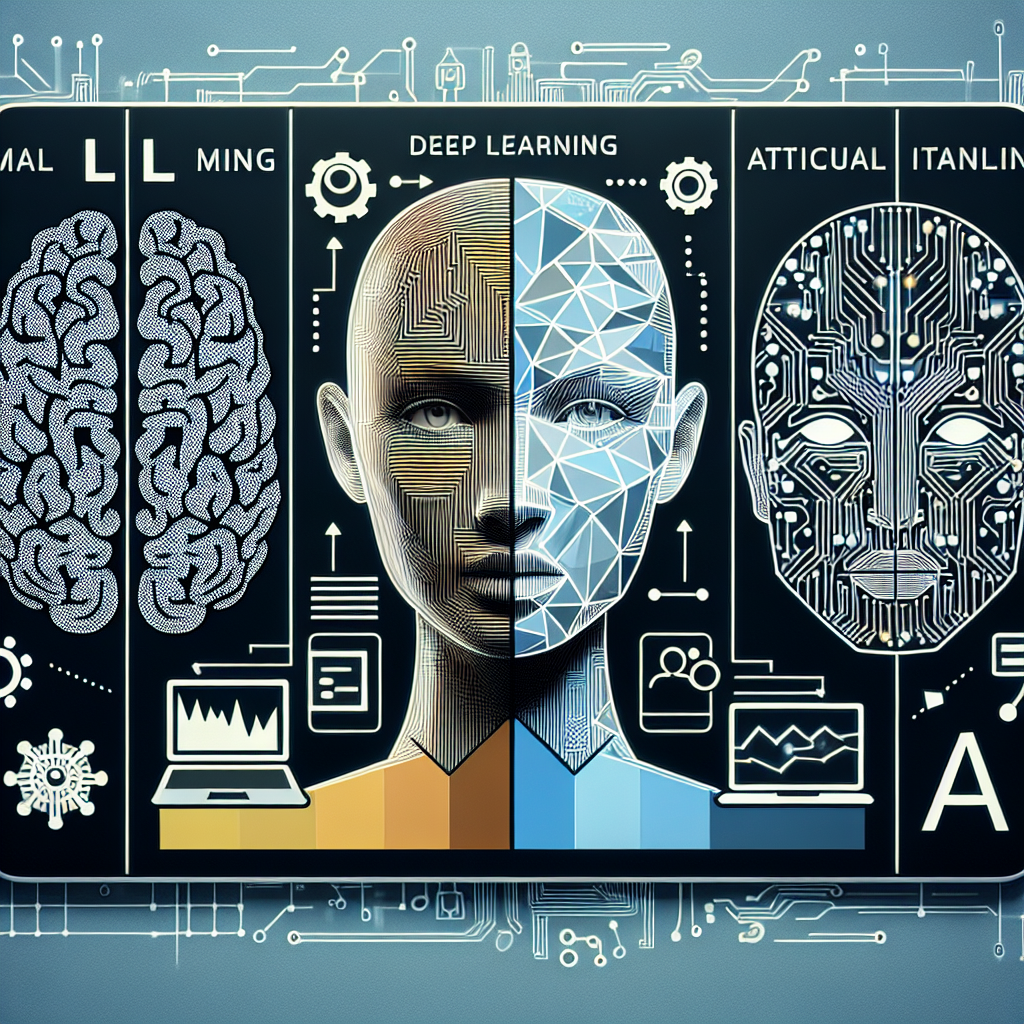
For those looking to embrace technology, whether it’s a tech enthusiast, a business leader, or a curious learner, comprehending the ML vs DL vs AI debate is crucial. In this comprehensive guide, we will delve into the fundamentals of ML, DL, and AI, elucidate their distinctions, and provide real-world examples to demonstrate their applications. By the end, readers will possess a clear roadmap for leveraging these technologies in practical situations.
Defining Artificial Intelligence
Artificial Intelligence is the overarching concept that refers to machines or software mimicking human intelligence. Think of AI as the ability of computers to perform tasks typically requiring human intelligence. This includes understanding natural language, recognizing patterns, and solving problems—a field extensively covered since the mid-20th century. For instance, AI is the technology behind virtual assistants like Apple’s Siri and Amazon’s Alexa, which can process inputs and provide intelligent responses.
However, AI’s applications aren’t confined to just voice-activated devices; they extend to robotics, gaming, and even autonomous vehicles. A report by PwC states that AI could increase global GDP by up to 14% by 2030, thanks to efficiencies and innovations it can introduce across sectors. But while AI seems all-encompassing, it’s the techniques within AI—such as ML and DL—that refine its capabilities.
The Importance of AI in Modern Industries
Today’s industries heavily rely on AI to boost efficiency and innovation. In healthcare, AI algorithms predict patient outcomes, assisting doctors in treatment planning. Fintech companies use AI to detect fraudulent transactions swiftly, safeguarding finances. For businesses, AI-powered data analytics offer insights that drive strategic decisions. A McKinsey report notes that companies leveraging AI effectively see a 20-25% increase in earnings before interest and taxes. These examples highlight why understanding AI’s applications and limits is crucial for anyone aiming to leverage technology’s full potential.
Exploring Machine Learning: The Data-Driven Approach
Machine Learning is a subset of AI where algorithms improve automatically through experience. Instead of being programmed with specific instructions, ML models detect patterns and make decisions based on data input. For instance, Netflix’s recommendation system relies on ML to suggest shows based on user viewing habits. This concept, rooted in data science, emphasizes how effectively algorithms can infer from vast datasets. In practice, ML involves supervised, unsupervised, and reinforcement learning techniques. Supervised learning trains models with labeled data, while unsupervised learning finds hidden patterns in unlabeled data. Reinforcement learning, on the other hand, learns by interacting with the environment to receive feedback.
Real-World Applications of Machine Learning
ML is pivotal in various industries, often driving productivity and innovation. Retailers utilize ML for demand forecasting, optimizing stock levels based on predicted sales. In cybersecurity, ML identifies potential threats by recognizing unusual patterns in network traffic. Additionally, the automotive industry employs ML to enhance driver-assistance systems, improving road safety. According to a report by Deloitte, 67% of manufacturers use ML to identify improvements in operational processes, showing tangible benefits in efficiency and quality control.
Implementing Machine Learning: Challenges and Solutions
While ML presents significant opportunities, it also poses challenges. One major hurdle is the requirement for vast amounts of quality data. Poor data quality can lead to inaccurate predictions. However, implementing robust data collection and cleaning processes can mitigate this issue. Another challenge is the interpretability of ML models, often dubbed as “black boxes.” Techniques like LIME (Local Interpretable Model-agnostic Explanations) help clarify model decisions, enhancing transparency. Companies must invest in the right tools and skillsets to leverage ML effectively.
Diving Into Deep Learning: The Intricacies
Deep Learning is a sophisticated subset of ML inspired by the human brain’s neural networks, designed to handle more intricate patterns and structures. Characterized by its layered architecture, DL processes data hierarchically, allowing computers to “learn” from a deep level of abstraction. For instance, while traditional ML recognizes certain features, DL can understand complex structures like facial features in images through its neural networks. Google’s DeepMind, which developed AlphaGo, a program that defeated the world champion in Go, exemplifies DL’s potency in mastering complex tasks through intensive training on massive datasets.
Practical Applications and Transformations with Deep Learning
Deep Learning’s ability to handle large volumes of unstructured data makes it invaluable across sectors. In healthcare, DL assists in reading medical images, offering diagnostic support. For instance, DL algorithms can analyze x-rays more quickly and accurately than traditional methods. In entertainment, software like DeepArt transforms photos into artwork using DL techniques. A Statista report indicates that the global deep learning market size will be worth approximately $18.16 billion by 2028, reflecting growing investment due to its transformative impact.
Deploying DL involves unique challenges, primarily related to resource demands. Training DL models requires significant computational power, often necessitating specialized hardware like GPUs. Additionally, the complexity of these models can lead to overfitting, where the model performs well on training data but poorly on unseen data. Techniques such as dropout regularization and using more extensive datasets can alleviate these issues. Industries adopting DL must weigh these considerations carefully to balance innovation with cost and practicality.
Comparing Machine Learning, Deep Learning, and AI
While AI is the overarching entity, ML and DL represent more specific approaches within that realm. The primary difference between ML and DL lies in the data processing approach. ML requires structured data and often needs explicit feature extraction. In contrast, DL’s architecture allows it to process unstructured data directly, learning representations during training. Consider a real-world scenario like fraud detection in banking. ML might flag unusual transaction patterns by predefined rules, while DL could develop more nuanced models identifying anomalies from vast amounts of transaction data without explicit programming. Understanding these differences enables businesses to select appropriate technological solutions based on their specific needs and data environments.
Implementation Tips for Businesses
Determining when to leverage AI, ML, or DL hinges on the problem’s complexity and available data. Businesses should assess their specific needs—simple automation might only need AI, whereas intricate pattern recognition could require DL. Collaborating with experts and investing in workforce training ensures effective adoption. According to research by the Boston Consulting Group, companies that integrate AI technologies gradually while developing internal expertise see more success than those attempting to fast-track adoption without solid groundwork.
Conclusion
In summary, understanding the distinctions between Artificial Intelligence, Machine Learning, and Deep Learning is crucial for harnessing their full potential. AI serves as the foundation for creating intelligent systems, while ML contributes to this intelligence by improving models through data. DL, with its sophisticated architecture, excels in processing complex patterns. For those aiming to leverage these technologies, knowledge of each field’s nuances—such as data requirements and computational capabilities—can guide informed decision-making. As industries increasingly turn to tech-driven solutions, embracing the ML vs DL vs AI landscape offers a pathway to innovation and growth. As your next step, consider embracing an iterative approach to integrate these technologies incrementally, ensuring alignment with your organizational goals and capabilities.